
Track bikes have been part of cycling history for over a century. In fact, the first Tour de France in 1903 used fixed gear bicycles as the standard for competition before the freewheel system was introduced in 1907.
Over time, cycling technology evolved, with derailleurs and brakes becoming a standard.
What was once the beginning for racing became a symbol of urban riding. Among younger riders, especially Millennials and Gen Z, fixie culture found a new identity on city streets.
In Cebu, one of these groups has helped shape that movement. I was able to get an up-close interview with a local icon, Christian Cortes also known as “Mandaue Animal”, as he rides one of the aggressive track frames in the country, the Manila Animal by local brand The Project.
Meet the team, Cabskids FIxed Gear (short for Cabancalan Kids or Cabancalan Skids), the crew was founded in 2020 by Christian Cortes, Kyle Cortes, Dan Aguelo, Michael Seno, Alaire Racaza, along with the former members of CABSB (Cabancalan Skateboarding).
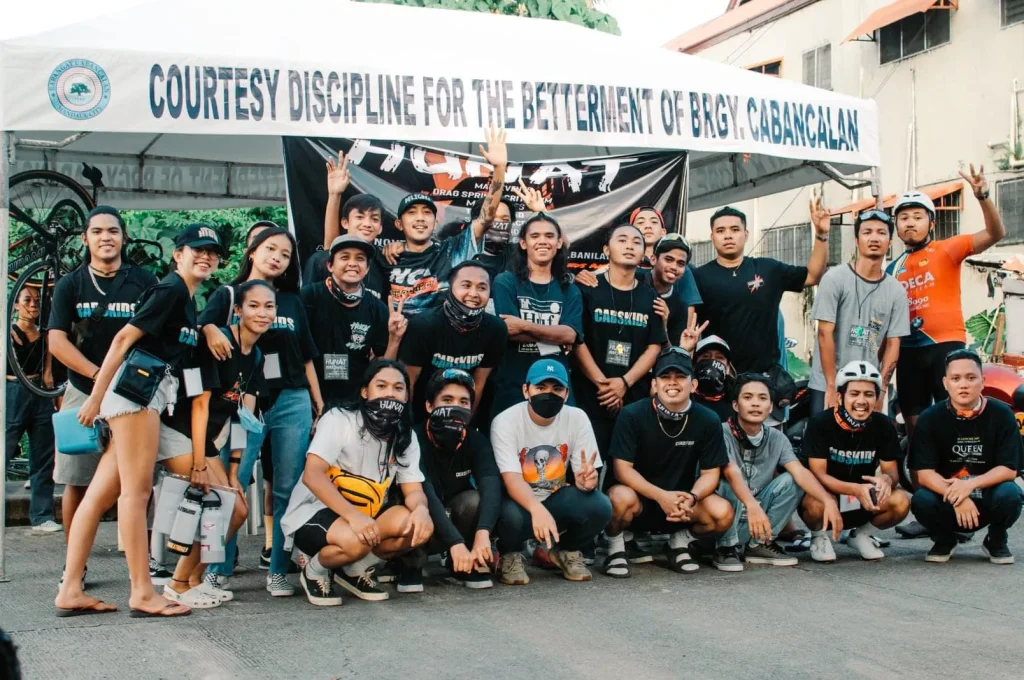
At the beginning of the COVID-19 pandemic, it caused the skateboarding scene to decline, and members transitioned to another outlet of the same experience.
“Fixed gear was chosen because it offers a riding experience that closely resembles the freedom and creativity of skateboarding, but on a bicycle,” Cortes shared.
Despite being referred to as “pandemic cyclists” the crew simply started a night ride gathering.
“The idea was simple: go out, meet new people, and just ride together. At first, there were only about 10 of us riding every Wednesday night, but over time it grew into a movement, with around 40 to 50 riders joining each ride,” Cortes recalled.
For several years, fixed gear cycling carried a reputation that placed it on the edges of the cycling community.
“Fixed gear was once labeled as the black sheep of the cycling community, but we’re proud to have helped change that narrative here in Cebu, together with other local groups,” Cortes explained.
To help grow the local scene, Cabskids also began organizing their own cycling events, participating in competitive functions and building connections with riders from other parts of the country.
One of their earliest projects was HARUS: Alleycat Race, a street race that reflects the unpredictable nature of city riding. Cyclists navigate checkpoints and swerve through traffic across urban routes while racing against time.
Later, they launched HUNAT DOS: The Criterium Race, which focuses on circuit racing and aims to discover potential track cycling talents in Cebu.
Beyond racing, the group also found ways to give back to the community through an outreach effort called The Sandwich Project, Cabskids distributes food to street children across different areas in the city.
“All the profits from our events help support The Sandwich Project, so far we’ve been able to feed close to a thousand children,” Cortes said.
Despite their growing recognition in the cycling scene, the members of Cabskids keep a simple perspective on what they do.
“There’s nothing really special with Cabskids, we’re just kids who really love riding our bikes. We are proud of the community here in Cebu because everyone has a fair share of keeping the community healthy and engaged, especially the new ones,” he added.
Looking ahead, Cabskids continues to welcome cyclists of all types to join their rides. Collaborating with various cycling group admins, they plan to keep organizing events that promote the fixed gear scene in Cebu.
“We will continue to show up, support one another, and train to compete here in Cebu and beyond. We will do our best to help the community in any way we can, while also organizing events that create opportunities for future and new fixed-gear riders,” Cortes concluded the conversation.
Cabskids prove that behind Cebu’s busy streets, there’s more to fixie culture than stylish rides. Through their races, and community efforts, they show that riding freely isn’t just fun, it’s a way to connect, and leave a legacy.